Tuesday, November 29, 2011

Small Town Therapist on Duct Tape Therapy


Duct Tape Fixes Everything
Olive oil is the duct tape of cooking
Openness is the duct tape of learning
Tradition is the duct tape of religion
Insight is the duct tape of therapy                        

                                                                                               Flexibility is the duct tape of cooperation

Fearlessness is the duct tape of skiing
Fluidity is the duct tape of ballet
Logic is the duct tape of debate
Compost is the duct tape of gardening
Style is the duct tape of writing
Timing is the duct tape of comedy
Communication is the duct tape of peace
Harmony is the duct tape of marriage
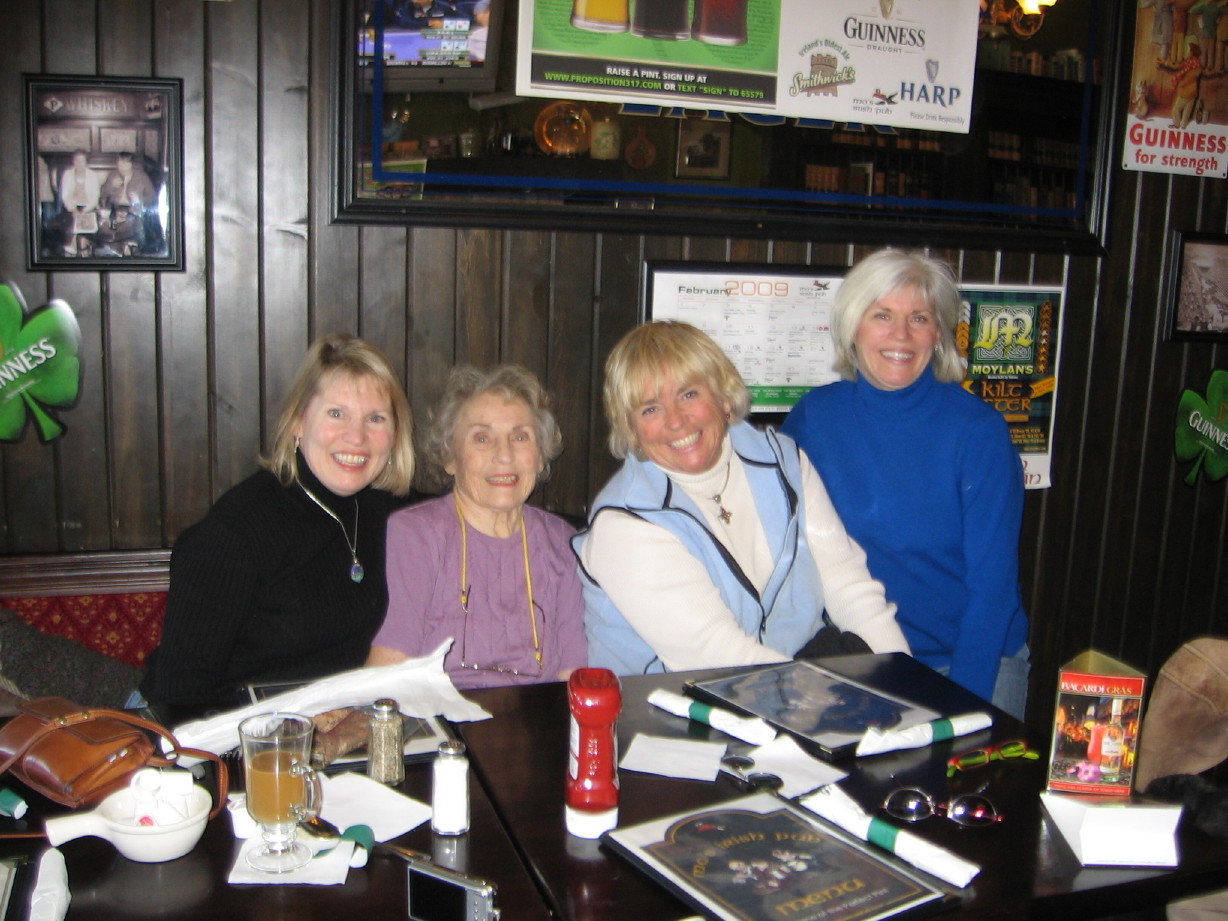
Laughter is the duct tape of friendship
Love is the duct tape of relationship

                              Surprise is the duct tape of humor 

                  and                                                                              You are the duct tape of me.                                     Susan R. Grout 

I got to thinking one day on how often and why for a variety of reasons, I use duct tape and this lead to the poem. What holds us together in relationships is so multifaceted. Clearly the common denominator of what holds the world together is love, all we need is love. Sound familiar?

In my long marriage I have learned some things the hard way, repeatedly making the same mistakes with overwhelming frustration and seemingly no way to resolve the situation. Example being, I'm a chronically on time person. My husband is someone who gets where he's going at the last possible second. Here is what has not worked to hurry him up: drumming my fingers, pacing, nagging, scowling, and preaching. In fact the only thing that has worked is for me to take my own car if I feel frustrated. That's the "S. Grout method". However, for 20 years he worked in another city and came home only on the weekends. Miraculously he managed to make it home having only missed the ferry a couple of times in 20 years. What was remarkable I wasn't there with my superior wisdom and finger drumming techniques to hurry him along. He did it all by himself. Hmm, I wonder if all the pacing and nagging might have been ineffective?

I'm constantly examining what does work in relationships other than love and harmony.
I find it's far easier is to list what doesn't work: selfishness, rudeness, unkindness, disinterest, disdain, contempt, criticism, childishness, intolerance, dishonesty, addictions and deceit. Of course, this is just a partial list there are numerous other road blocks to love and harmony in a relationship. So, by contrast here is the positive list: love, respect, trust, communication, cooperation, humor, maturity, kindness, curiosity, willingness, diligence, honesty and straight forwardness. Simple right?


I find that it's so easy to be calm and a pleasing, nice person when things are going well in a marriage. The positive list springs forth and all is well. Ah, but when difficulties come up, the apple cart gets upset---look out for those falling apples. This has happened, on more than one occasion in the past, when Mr. G and I were hopelessly lost in unfamiliar cities. Tension leapt out of both of us and sadly, we started to decline in age [by decades] and took to yelling and blaming each other as preteens are apt to do. "It's your fault that we are on this dead end road" "You're the one who told me to turn too late!" Ad nauseum.

Communication is the duct tape of peace

 We got the chance to showcase our maturity and progress.  this same situation, getting hopelessly lost, happened on a trip to see the grandchildren. We were supposed to drop our grandson off at a friend's house in the city for a party. Seemingly this was very easy-- until we missed the a quick turn off that I failed point out [I was the navigator]. We found ourselves on one of those highways with an uncrossable median and no way to recover our error for miles. Yikes. To our credit we didn't yell at each other in deference to the children in the car. Also with the miracle of  cell phones we were rescued via speaker phone by the mom at home awaiting our destination with instructions for an alternate route. She was incredibly understanding about our error and very gracious and helpful to us. We looked at each other, after we dropped off the grandson and were much chagrined. There and then we vowed next time to study the map prior to take off for parts unknown. The good news is we were civil to each other, the better news is many years ago this would have been a yell fest and we have matured! About time.

Insight is the duct tape of therapy

My own insights in the past have been rather short lived, I clearly hope that my clients fare better. Though I still tend to make the same mistakes over and over again [did I point out that I am rather impatient?] the agony time is shorter and shorter as I age. "Oops", I say internally and quickly go about rectifying the situation and set about to have a good time, a primary goal in my life.

Flexibility is the duct tape of cooperation

After we finally found our destination for our grandson, our son had urged us to take our granddaughter to a park to play. That way we could wait until we had to pick up our grandson after the party. Well and good. However, have any of you tried to find a parking place on a sunny Sunday near a children's park in a big city? What fun! Sometimes you can get lucky but clearly this was not our day for that and we drove from one car jammed street to the next trying to find one tiny space for our rental car. Finally after 15 minutes of this fruitless endeavor we looked at each other and said, "how about the beach?" Our granddaughter wasn't thrilled but a very good sport especially after we bought her a chocolate croissant and 'Annie's Cheddar Bunnies' [both!] down by the shore. We ended up having a very pleasant afternoon and the final bribe of hot chocolate clinched the deal. A very fine afternoon indeed. Roll with the punches my friend. Not only does duct tape fix everything but also bribery and treats do as well.


:
Timing is the duct tape of comedy
Laughter is the duct tape of friendship

Tuesday, November 15, 2011

On Perfecting Silliness

Some of my family fooling around.
What happened? I thought they turned you into a newt?
I got better.                                             Monty Python
Bring out your dead! Bring out your dead!
I'm not dead yet. Boof!
You will be...                                  Monty Python
Every sperm is sacred.                            Monty Python

In the state of Mississippi some believe, that every sperm is practically a person. It was on their ballot. If the thought was not so horrifying for all womanhood, this is to me, the height of silliness. Fortunately Monty Python beat them to the punch with their song, "Every sperm is sacred" and also fortunately the state of Ol' Miss has many rational and intelligent people. The ballot got roundly defeated.

One of the perks of my job is that I get to hear about people's stories and lives. True, everyone has their trials and tribulations and tragedies but often over looked and under appreciated are the screamingly funny situations that happen in most of their lives. That is precisely why I insist that all my clients, each day, find something that is amusing and that each day they be aware that funny/silly things are happening all around.


I really try to talk up silliness as an important addition to any relationship. My family is inordinately close and one of our bonds is the humor we have when together. An example being we just were in Kansas City for a wedding of one of my nieces. MY brother was looking for "the best barbeque in Kansas City" which struck all of us as the perfect quest. So when he asked around and three unrelated people said "Gates" we headed out for the restaurant. When I looked up at the menu and saw "Slab of Ribs", I knew exactly what I wanted. I coaxed my husband, "let's do it!" He shook his head, "that's too much food". I didn't whine but he said, "what the hell" and we got the ribs. They were fabulous and incredibly filling. After I ate approximately one third, he looked down and there was one juicy rib left. He said, "someone tell me to not eat that rib." Spontaneously we all yelled, "Go! Go! Go!" and he finished the rib to our chants. How we laughed. At the wedding in the spirit of silliness my niece and her now husband had rented a photo booth that shoots out the column of four little black and white pictures. The best was my son who kept a straight face and was in a different costume for each shot. When we complimented him he said, "it was hard work." Mr. G and I had so much fun we did it twice, once making faces and kissing and once with costumes.


Speaking of kissing, one of the most under reported sexual allures is the ability to make a partner laugh. It is a huge leg up [no pun intended] for the attraction to a mate and it definitely increases interest in the would be wooer. Speaking personally, Mr. G would never have so quickly won my hand without his ability to make me laugh. The above picture raises silliness to an art form, literally. Here are Mr. G and brother Bob fooling around a sculpture of a giant spider in front of a contemporary art museum. Made me laugh. Aren't they amusing?

I believe that sentiment, increasing daily hilarity in a partner, is hailed by many a woman as an important plus. And since we are the only mammals that can exhibit wit, to my way of thinking, it is an enhanced form of courtship. Admittedly, monkeys, baboons, hyenas can laugh but only when tickled, not from a situation or an expression. I don't think that baboons and monkeys make their partners laugh prior to coupling.

One of the happiest forms of silliness is games. I can hear an audible groan from all the sports fans, but trust me, these honestly are silly games even if they are called Superbowl's, or the World Series [which we refer to in our house as the World Serious]. Money aside it is a form of play and in adults, a form of silliness.

I love some games and loathe others. Don't we all? I will walk, or cross country ski miles to be with friends for a game of Scrabble even in the dead of winter.  I delight in Banana grams, Mexican Train and charades. We are actively trying to pass along this past time to our grandchildren and so far successfully. It's fun and it's silly and, if not too competitive, a relaxing good way to be with each other.


Another good use of silliness is watching other's foibles on YouTube. I spent an entire evening watching videos people had taken of  their dogs that can "talk". Most of them "said" things like "I love you" which sounded a lot like whining but my, oh my was it funny. I discovered this several days after I saw my Mom for what I knew would be the last time in my life and needed a little pick me up. Silliness to the rescue. Also, Will Ferrel has a very funny and very silly video on UTube with his two year old daughter Grace playing the part of his landlady. So, little kids, dogs and cats, puppies and kittens provide endless entertainment, especially if you are sad, lonely, grieving or plain bored.

What this all comes down to is my observation from the previous post that with depression there is very little levity. So it begs the question, can we coax levity? A definite yes. Always? No, but what the hey, give silliness a try. Monty Python works best for me, but then there are the embarrassing favorites like 'The Pineapple Express', 'The Bridesmaids', and less embarrassing 'Young Frankenstein', 'The Producers', 'Raising Arizona' many of the Marx Brothers films. These movies which can shake up your depressed, crabby mood and make you laugh. If that doesn't do the trick read a funny book, call someone who routinely makes you laugh, but act on your funny bone. The only thing you have to lose is the blues.

susansmagicfeather copyright 2011 Susan R. Grout  all rights reserved.

Monday, November 14, 2011

Depression, Sausages and Drugs

For all sad words of tongue or pen, the saddest are these: it might have been.                                             John Greenleaf Whittier 
A sad tale's best for winter...What's gone and what's past help should be past grief.    William Shakespeare                                                             

As simplistic as it sounds, I am in the business of making people happier. No one walks by my or any other counselor’s office and says, “Hey, it’s a nice day, think I’ll go in for counseling.” Clients come in because they’re carrying around problems that need discussing, if not always solving.
Long ago, I read a pivotal study by Dr. Martin Seligman that positively influenced me. In the 1980’s his group of scientists performed an unkind experiment with dogs on “learned helplessness.” They  constructed a huge cage with an electrified  metal floor and shocked the dogs randomly until they just gave up, lay down in their cages and awaited the next jolt. They had induced despair. The story could have ended there, with a pack of highly neurotic dogs. However, these were scientists who had hearts as well as brains and they decided to see if they could help these dogs recover.

So, using sausages as rewards, they coaxed the dogs out of their pens. With some of the dogs it took as few as 10 times dragging them by the collar to the sausages, with others as many as 50 times, but ultimately all of the dogs recovered. I said to myself, "I think  perhaps I could help clients find the particular “sausage” that could coax them out of their own cages."
The drug companies would have you believe that only with their particular drug can you recover from depression. Pharmacology does have its place in psychotherapy, but significantly less than the drug companies would have you believe. The truth about antidepressants is that, in controlled studies, placebos did almost as well. [Turner et al, University of Oregon Health and Science 2006 and a 2005 article in Scientific American]. Pharmaceuticals is a multi-billion dollar industry and the last thing they want you to know is that there is a more natural route to recovery from depression that is nearly and perhaps more effective as taking their drugs.  
[Caution: If you are currently taking an antidepressant and want to stop, do not cease taking your medication. Talk to your doctor about withdrawing slowly.]  
The alternatives and, in my opinion, superior routes to happiness consists of simple things. You may have heard this over and over again but it bears repeating.
  1. Do follow a healthy, nutritious diet, be modest in your portions and don't over eat.
  2. Do at least 30 minutes of  exercise regularly (that means most days), which can be as simple as walking or yoga.
  3. Do have several good supportive friends in addition to family members.
  4. Do become aware and mindful in your life.
  5. Do seeking counseling when troubled.
  6. Do make sure you are amused and or laughing every day and share that with someone. 
  7. Do remember that life can surprise you and be eager to have more good times in your life, even if you are going through a rough patch.
  8. Do plan a trip even if it is to another neighborhood for the afternoon, but move the body away from staying house bound.
  9. Do go beyond yourself and help a neighbor, call a friend in need, volunteer.
  10. Do sit and let all of the sadness that is in you rise up and just watch it, don't judge it, allow it to be--- then get up and do something silly.
I realize that there are those who have done all of the above and still are depressed.I also realize that if you are grieving it is appropriate to be depressed but if it goes on and on it can become "complicated bereavement", turning into protracted depression.

One woman I saw awhile ago was diligent about this non-drug approach and she still was not able to escape her cage. In her case antidepressants was a necessary adjunct. Since numerous studies have shown that psychotherapy coupled with antidepressants greatly enhances recovery from depression, she was able to recover with the two. 
In our small town the Doctors are quite progressive and know that this is the case and frequently refer depressed patients to counselors. Sadly,  the coupling antidepressants with counseling seems not to be well understood in most of the country. Is it because the Doctors are ill informed? Is it because they fear that they would be insulting their patients? Is it that people are embarrassed to seek professional help? Maybe all of the above but something has got to change, it is ridiculous that so many people are needlessly on antidepressants.
Happiness makes up in height for what it lacks in length.  Robert Frost
Funny but true, most of us can’t make our own sausages so we turn to the butcher. Rewards, like sausages to a dog, can work for us whether it is a good meal, a hot bath, a good cry with a friend, a movie, candy, a trip, rewards can work.
Sometimes people just need a little tug on their collar in order to view their life in a new way and to get a reward. Counseling can provide that tug on the collar and open up a whole wide world of rewards.
Tomorrow: Effective silliness that cures most

susansmagicfeather copyright 2011 Susan R. Grout  all rights reserved.

Monday, November 7, 2011

Letting Go of the Guilt Machine

My one regret in life is that I am not someone else.             Woody Allen
To err is human but it feels divine.                                             Mae West
There is this thing about guilt. It's contradictory. It's very necessary, and very unnecessary, very heavy, and very essential to our  humanness. The biggest trouble with guilt is it's repetitiveness, it has the capability to be unrelenting and unproductive. This can change! [Doesn't this almost sound like I'm in the advertising business: Get Productive and Guilt Free in only Five Easy Lessons!]  I believe when we feel an excessive amount of guilt it can be used effectively and ultimately lessened.

Here are the ten easy steps to lessening the guilt you feel:
  1. Sit down [or pace the floor] and come up with what you feel  most guilty about. Be clever, be witty, be depressed, but by all means be honest.
  2. Write down what you are guilty about.
  3. Sit still [or pace again] and let yourself contemplate your missteps, carelessness, inadvertent sins or purposeful egregious acts.
  4. Stay with these wretched thoughts for at least five minutes.
  5. As you are thinking write down possible solutions to resolving or absolving the guilt.
  6. Make an action plan to ease the burden and make amends when necessary.
  7. Be prepared to do the above each day for a week.
  8. Put the notebook with the guilt list and solutions away.
  9. When your brain tells you that you are guilty, acknowledge it and then concentrate on the actions you've come up with to rectify the situation.
  10. Take the action and actively invite the feelings of  release, letting go, as Mae West it can even feel divine.
I'll give you an example of this. Recently, the wife of an old client of mine died a sad and prolonged death. He was at her side and her behest constantly. He is the epitome of the good husband. Yet when I visited him he confessed that he felt wretched for all of the times when he was angry or impatient with her. I'm telling you -he couldn't be more saintly but his thoughts all raced to his imperfections while attending her. I tried to reassure him that for good people like him, with sincerely deep consciences, it's natural to feel guilty. "The brain and body know something is terribly wrong and so in spare moments they will go on a search for things that you feel terrible about and those moments of anger or inattention are bound to pop up." "Well, I did get angry at her sometimes and frustrated about all of the extra work I had to do." "Yes, but she couldn't have had a more caring or devoted husband, remember that." I'm not sure if this lessened his guilt but the explanation about the brain is valid and he did shake his head in recognition and agreement.

He has more of a conscious than Mr. Cheney
The opposite of this is the poor unfortunates who rarely ever have a guilty feeling. Our own Dick Cheney comes immediately to mind. This is a man who not only justified an unnecessary war but also made billions of dollars in profit from this war. He not only does not feel guilty for all that should be on his conscience, but he justifies his actions in a book, thereby profiting again for his sins. This is the height of self serving and is reprehensible. My cat has more of a conscience than Cheney. People like Dick Cheney are the people who tend to be narcissistic, "if it's good for me it must be good." They go on their merry way hurting others in their path [and some are unfortunately children] and never feel the slightest twinge of guilt. Most of us have encountered this in our lives, these people do not make good friends, lovers, neighbors or citizens. In my humble opinion he should be charged with his crimes against humanity and have to pay back all of the profits or at least give the money to the ones who have been harmed by that war. To my count there are hundreds of thousands.

Give me the good men and women with a conscience, the ones who are caring and loving and good citizens to boot, they are going to have moments when they feel guilty. My wish is that they put the guilt to good use and change the situation into something meaningful.

I hope that there is karma, or an after life or some other form of justice that will hold the warmongers, the rapists, the abusers accountable. To focus on all of the injustice and not do anything about it, well, it makes me feel guilty. Hence I write these blogs, I write letters in protest, I vote against the selfish and the greedy. I hope that you do too.

The world needs more geniuses with humility, there are so few of us left. Oscar Levant
If I were Queen, I say humbly, I would order all of the actually guilty people to do penance, in public. I would order public works like care taking wounded soldiers, rehabilitation paid for by the abusers, have the monies restored by the bankers who stole from us all and then gave themselves bonuses, etc. See, if you follow logical consequences it could all go so well. The Queen has spoken, long live the Queen.

susansmagicfeather copyright 2011 Susan R. Grout all rights reserved.

Friday, November 4, 2011

Misbehaving with Recipes and Life


Some say the world will end in fire
Some say in ice
From what I've tasted of desire
I hold with those who favor fire            Robert Frost

I've been asked on many occasions if I would consent to give a recipe, principally of desserts that I've made for pot lucks. Though flattered, I have a standard reply: "sure, with this caveat: I rarely follow a recipe exactly. I use them as jumping off points and tend to improvise like a jazz scat singer."  Well, perhaps that is an over exaggeration but having given precisely written out recipes to people I've found that the results so vary from what they tasted of mine, that I can't help but think there is one missing ingredient: me.
An excellent cook, Jonathan

I don't like to cook, I love to cook. My desire is to makes something not only delicious but also a bit surprising. I love to throw in an ingredient that has people tasting and puzzling and tasting again. The brave ones always ask, "what makes this so unusual?" And depending on the audience I will reply with the truth or say something ridiculous like "toothpaste!" Amuses the hell out of me to watch their expressions.

I carry this over to my counseling. I can't recount all of the times that I've gone to a workshop, supposedly with a shiny new technique for the psychotherapist, and thought, "Humm, interesting technique, I do that but with my own twist." I realize that must be extremely frustrating for the junior clinician who "just wants the facts ma'am" but the truth is psychotherapy is a lot like cooking. I don't like it, I love it. I know that working with people there is always that third ingredient that makes a huge difference in the outcome. Some of this has to do with my experience and all of the 40 years of studying and trying to create the best possible outcomes for my clients. But there is that 'other' factor, an alchemical blend of respect and love that propels the client, and me forward to reach some times just satisfactory and other times fantastic conclusions.

One of my favorite examples of this was a woman I saw many years ago who had several family members killed in a bizarre accident. Her grief was, as you can imagine, enormous. She needed a way to cope so she could concentrate and do her job. I did all of the usual acceptable techniques to hurry up the grief process and then I turned to her and said, "I think we need some kind of a ceremony." That next week, she brought in the most profound poem about her burning desire to see justice done for her dead relatives. As she read the poem, I was teary and happened to looked up over her head, out the window to see first a murder of crows and then a convocation  of eagles fly by the window. I stopped her and said, "You've got to see this" and we watched in awe as they gracefully circled back by the windows again. This is the alchemical, the something you can't teach in a workshop but such a powerful ingredient in her recovery it left us both speechless.

I have so many tips and recipes to share but I am best sparked by other's requests so just like with clients who come in and want changes in their lives, what would you like? Could it be a change or a recipe? Feel free to request. I will see what I can do and what happens between us. Let's get fired up, that's how the change happens.

magicfeather copyright 2011 Susan R. Grout all rights reserved.

Tuesday, October 18, 2011

Lost Harvest

Mr. G and I went babysitting over the weekend and to say the least it was a delight. Our grandchildren at 10 and 6 years old both play soccer and we got to take them to both games. Such fun and they are excellent players. I came home Sunday night and it was dark as I pulled into the driveway, appreciative that friend Meg had taken good care of my cat Rufus, he was there waiting for me. Exhausted from babysitting I slept nine full hours, awoke refreshed and eager to spend the morning preparing a thank you lunch for Meg. The lunch was good, especially the apple cake that I made, giving her more than half to take home. We had two rousing games of Scrabble, each winning one. After she left I took a walk to collect the mail and as I ambled back thinking "I'll pick the apples and start first on apple jelly, then perhaps some apple butter and then give some of those apples to my nieces and sons..." when I reached the driveway with a clear shot of the apple tree in the sun and discovered that every last apple had been picked from my little tree. At first I couldn't believe it. I ran to the tree and looked up, not even one apple left. This was not only theft, this was cruelty.

Last year because of climate change we had a wonky spring and a very late frost. I called Mr. G that year and said, "I just ate our crop." It was a whopping three apples. So you can only imagine how excited I was to have a lush crop of the Akane apples this year. Thrilled. You can also imagine how saddened and disappointed I am to have had harvest violation.

I called the people most important to me, first Mr. G but he was travelling and unavailable, then one of my nieces and then Meg. She said, "I never noticed the tree, do you think your neighbor had someone pick them for you?" "No, she is in Canada until mid week, and she would never do such a thing without asking." So, still feeling violated I called the Sheriff, it was all he could do not to laugh. "How do you like them apples," I believe was his most sympathetic comment.  A bit later Mr. G called back and was appalled and also sooooo angry. He wanted me to check the house and I did, not sure if anything was missing. We talked for about 10 minutes, unfortunately escalating each other's outrage.

After hanging up from the call to my husband I felt a need to clean the house. I vacuumed and scrubbed to get the foul taste out of my head and to stop the whirling thoughts. Still angry I decided to switch gears altogether and made myself a nice dinner, chopping veggies and including an apple from the tree that I fortuitously did harvest before the pillage. A tad better, I went upstairs to connect with all my family that's on Face book. That's when things did dissipate.

When I refuse to forgive someone who wronged me, I sentence the person to a long prison term without pardon ... Now as jailer, I must spend as much time in prison as the prisoner I am guarding. Bearing a grudge is very costly, because those feelings of anger, resentment and fear drain my energy and imprison my vitality and creativity.                Zalman Schachter-Shalomi

Naturally  I read my e mails first and among them was pictures from my old friend Judie of a Polar bear that befriended a Huskie in Alaska and came each night to play with him. Then there was pictures of Koala bears in Australia begging for water when it was unbearably hot [pun intended]. Very cute indeed and gives you a different outlook on love and generosity. Next I went to Facebook as saw the ultra sound picture of a niece's baby. Exciting for the entire tribe, and we are a huge one. Finally I watched a CNN film clip someone sent. It was about a man in India who had worked as a chef in a Four Star hotel, but noticed the starving all around him. He said, "I quit my job and since 2002, I have fed the starving and abandon people who lived in my city." I watched as he tenderly fed and shaved a starving man, an 'untouchable'. It was touching and a good reminder of how spoiled we are, those  of us with a good job, a home, a fabulous family and yes, apples to spare.

Gratitude can change your attitude.     Anon
The apple thieves did wrong me and I am disheartened by their actions but I refuse to be their jailer. This is when the magical thinking kicks in and I hope that they truly were desperate and starving and without a job. Being in a somewhat affluent community brings doubt to my mind, but what the heck it is my fantasy. Would have be nice if:
  1. they had asked
  2. they were truly needy
  3. they weren't sneaky
  4. they were honorable and left at least half of the apples for our family.
I am giving myself the entire rest of the day to pout about the loss of my apples. I will be pissed about the presents I cannot present, the dishes I can't make, the lusciousness of biting into the crisp Akane off the tree and the icky violation I feel at being ripped off.

As is our custom, Mr. G and I talk every night on the phone. We, of course, launched into a heated discussion of how rotten those apple thieves are. Then he said something very good, "we've got to stop talking about this or I will never get to sleep." Hey, I am supposed to be the smarty pants counselor and here he is counseling and consoling me. So we talked about our granddaughter and what a terrific star she is on her team and how funny the six year old grandson is and we laughed together at their attempts to get Mr. G to have a "natural laugh" by pressing on his stomach. [He would imitate Woody Woodpecker every time, which reduced me to gales of natural laughter.] And after about five minutes we both were better. Ah, the brain can change and lighten the load.

I am going to work and I am going to ride my bike on this crisp fall day and I am going to put my face into the sun and be grateful that I have this wonderful life even if I am a few apples short of a barrel.

magicfeather copyright 2011 Susan R. Grout all rights reserved.

Monday, October 10, 2011

Heart before the Course

Just don't go puttin' the cart before the horse.         Everyone's Grandparent

"Don't put the heart before the course," I said. Oops! This sentence came to me while talking to a charming but very reticent client.  Imagine, he was actually dreading his future, sure that he was never going to find a life partner. Of course he was dreading a future of his imagination, not reality but something he congered up from his insecurities and fears. He had just divorced a couple of years ago and was fearful of dating and being rejected.

I think it was Mark Twain who said something like this: 'I have lived through trauma, turmoil and tragedy all of my life, most of which I imagined.' I try to interrupt those imagined negative outcomes.  And this is the point at which I misspoke myself to my client. I then laughed and corrected myself but added,  "you do need to put the heart with the course, not before it."

The oft quoted tome is to "follow your heart" and that is lovely when it comes to traveling, books, movies, literature, jobs and a host of other things. However, that is not always the best advice for someone who has had a series of troubled love relationships. I see many people who have had numerous failed relationships in various degrees of failure. So, wonder if you are one of those people who chooses with their heart and always picks someone who is dangerous for you. Or, wonder if in the case of the famous Jane Fonda, who admits: "the men I married were like me, they were not good at intimate relationships." Then, my dear, we need to follow more than just the heart. The same sorry advice is there in "let me hear your body speak," famously used in the song, "Let's get Physical". This is the error when someone uses 'better living through the chemistry' and they feel the body is the supreme voice. Oh my, but it can lead to some fairly disasterous choices for life partners. I've had women say, "I couldn't resist him, the way he looked at me made me all weak inside eventhough I knew he was a deadbeat Dad and all." Then, and finally, if you choose that life partner only with your head, more than one client has confessed, "he made good sense to me [as a life partner], I didn't want any wild boys anymore and he was such an adult man..." This choice, without the sustaining sexual/passion chemistry, can lead to the most boring of circumstances. The exception to this is that you are in your seventies and just really want a companion. So there we have it, the wrong way to go about choosing.  Then, how does one pick a great partner if you don't just "follow your heart, or only go for the chemical hit or leave your feelings behind and make a 'head decision"? Here are some ideas that I have gleaned over the 30 years in private practice and 44 years in a wonderful marriage. There are plenty of books out there that can give you advice from reknown psychologists on marriage,  but I ask you, how many of the psychologists who wrote these books had a great marriage? You'd be surprised, not many.

Here are a few suggestions for the 'course on relationship'. This course teaches you that choosing a life partner must involve not just your heart, but your head [mind], your guts and your intuition.
  1. First of all in choosing, aim for a "lover relationship" that is grounded in friendship, attraction, mutual interests, passions, humor, fun, trust and respect.
  2. If this is a new relationship, introduce your new person to all of the people that you care about and later, ask them to be candid with you what they think about your new love.
  3. When you have taken the plunge and formalized the relationship be sure to prioritize time for intimacy, not just sex but romantic get aways [even if it is just a walk around your neighborhood] where you can talk about what's on your mind.
  4. Keep yourself interesting, by reading, taking courses, sharing your opinion about world events, about the people you love or loathe, about the complications of your life. Share this and more on a daily basis.
  5. My famous dictum: tell the truth and run applies daily. Reveal your authenticity and always tell your partner what's bothering you or what's fabulous for you. The more 'touching in' each day, even about the small stuff, keeps your partner apprised of where you are emotionally.
  6. If this is the special person in your life, act like it. Be kind, loving, interested, generous and compassionate.
  7. Realize that you will have disagreements because you are not identical twins, but argue with your head and your heart. Be as respectful as you would to someone you greatly admired.
  8. Share your love to many: open your home, be interested in making new friends and connections and keeping things moving and lively.
  9. Be quick to admit when you are wrong and apologize promptly.
  10. Above all stay aware and amused and try and make you partner laugh each day.
  11. Appreciate what you do have and do so loudly, as I have said before, "praise does wonders for our sense of hearing."
  12. Love, love, love, kiss, kiss, kiss. Doesn't sound very scientific but, hey it works.

I discussed many of these ideas in the blog on "A Long and Fulfilling Marriage" in March. I am a big promoter of happier unions and science backs me up. Marriage, or a life partner encourages stability, staves off loneliness, usually solves financial problems and if worked properly lets people grow old in a healthier manner than being alone. plus you have someone to share jokes, complaints, meals and people with. It can be blissful.

In May we will celebrate our 44th anniversary and will be celebrating 42 years of married bliss. Hey, we're not perfect.

susansmagicfeather copyright 2011 Susan R. Grout all rights reserved.

Wednesday, October 5, 2011

In a Word, It's Hard...of Hearing

Many years ago at the urgings of my sons and husband I went for my first hearing exam. The wheels of suggestion tend to move very slowly for me and I had waited until I'd lost most of the soft sounds and had to ask people to repeat what they'd said more often. Movies were particularly difficult and I was unable to understand some of the dialogue. Not wanting to be rude I'd tug on Mr.G's shirt sleeve whispering, "what did they just say?" Being kind and sympathetic he'd answer me, "humm, mmmm, tttppp." So, more frustration, I couldn't understand his whispered response. I succumbed to the obvious and made the appointment for the exam.

During that first exam my fantasy was the Doctor would lean back and reply enthusiastically, "oh these are just plugged eustacian tubes," or "what a nasty infection you have in there" adding, " and we'll have this cleared up in no time!" Instead after the tests the Doc smiled kindly and said, "you should consider a hearing aid."

I remember that I didn't cry as I headed for a whole milk with whipped cream mocha, but I did feel particularly sorry for myself. "Poor me. I am far and away too young to be plagued with this tragedy, after all, I am a psychotherapist and rely on my listening for a living." I was only 50 years old not like my Mother who in her 70's finally got a hearing aid after years of shouting, "stop mumbling, I can't hear you."

In the adjustments stage of "I'm not ready for a hearing aid" I did all kinds of tricks: I pulled my chair ever closer to the soft spoken, honed my attention to the speaker in crowds and taught myself to read lips. To lighten up the situation I'd say to the soft spoken women, "if you don't speak up I'll be in your lap in a minute, " which usually rectified that problem pronto. Yet, it could be frustrating getting only part of a conversation in a phone call and worse, sometimes I'd have the most ridiculous guesses as to what someone was saying. Here's an example, an electrician was working at our house and I thought he said, "could I borrow your vacuum?" I glowed thinking of him humming while he vacuumed my house. "Sure", I said, "the vacuum's in the closet."  "No, the BATHROOM." Embarrassing. This misunderstanding, I am sorry to say, was not that unusual. This struggling to hear accurately went on for more time than I care to admit.  Finally I had a dream: I couldn't hear what someone was saying and in that dream a friend of mine said, "Susan, get a hearing aid." Not even subtle and I awoke chuckling.

Since I had waited so long, I had to be retested. My loss had progressed from mild to moderate, no surprise there. The young audiologist for this first go round of hearing aids put putty in my ears for the digital hearing aids that, at the time were the most technically advanced and the most expensive. President Clinton was wearing them and braver than me, was touting them to one and all. One of their charms is that you can fool people into thinking that you can hear perfectly because they are completely hidden in the ear canal. She recommended that I have one in each ear and gave me a 30 day trial period. She told me "scads of people are wearing these hearing aids, you probably haven't noticed." 

When my new hearing aids arrived, I  put them in and waltzed out of the office with great optimism and immediately, against the advice of the young audiologist, went to a noisey grocery store.  She had wanted me to stay in "gentle environments" to gradually acclimate to the sounds. Well, I don't do anything gradually, I believe in plunging in so this first excursion was more than educational. I could hear all of the irritating noises amplified: the paper bags rustling, the blaring shopper announcements and worse, my knees continually crinkling as I walked. I kept thinking, "do I need this?"

I kept mistakenly calling them "my ear plugs," because that's how it felt to me, ear plugs with a microphone. I became hyperconscious of my own voice, very annoying. But I continuted to be hopeful and adventuresome and wore the plugs in my office, to the movies, at home listening to music, on the phone and finally into an antique store. It was in one of the antique stores that I decided that perhaps wearing only one of the hearing aids would be less annoying, so I put one of those very small devices in the breast pocket of my vest. As I was climbing back into my car after poking around I realized to my horror that the hearing aid was not in my pocket. I must have dropped it, but where? In true financial panic I flew into the first one of the three antique stores and said, "I'm missing my hearing aid and it looks like this," as I whipped out the plug from my ear, "can any of you help me find it?" Imagine, if you will, the horror of combing those stuffed-to-the-gills dusty old shops for an object no bigger than a pistachio nut. The man behind the counter marshaled everyone in the store to help look. Everyone was so kind and solicitous and no, it wasn't to be found in the first, then the second store. I walked into the third shop and there lying on the floor, miraculously untouched by human feet, was that tiny hearing aid. I couldn't wait to get rid of those expensive devices.

Mind you, I had only used them for a month but I never did, with that model anyway, have the "ah-ha, so this is why I got a hearing aid" experience. Honestly, I was hoping that the digital hearing aids would be like wearing glasses for the first time when I was 13. "Will you look at that," I said to my sister in awe, "you can see individual leaves on the trees!" Indeed, it was then explained to me that the hearing aids can significantly but only modestly improve my hearing loss.

So I coped again and told the soft of speech "I have a hearing loss and would you mind speaking a bit louder?" Some people were uncomfortable knowing that I had this loss and I truly feared that I would lose all of my clients. That did not happen, I remained busy at work.

I tried another round and got one of the obvious, more old fashioned and less expensive models, the kind that you can see,  the ones that fits in the outer cavity of the ear and has a little wheel for volume control. Mom had one and liked it, so, I thought, why not try it. I did and it was OK for several years, a definite improvement over the ear plugs. I liked that I was able to tune out the fussy babies, the irritating overheard conversations and the loud music.

I was at a very raucous Christmas party a couple of years ago, wearing my single outer hearing aid and having trouble talking to one of my acquaintences with all of the background noise. He had just gotten hearing aids for the first time and was so pleased about his new hearing aids that he all but sang the Halleleujah chorus. Seems the hearing aids in the four years since I had acquired my outer number, had advanced again and it was an over the ear digital model. He actually wanted me to try it on at the party. I deferred but the enthusiasm was not wasted on me. I made an appointment, got tested and walked out that day with two new hearing aids. They are highly specifically programed to my hearing loss, have multiple settings for various situations and are a great deal better than the previous two models that I tried. So, I'm also pleased, not thrilled mind you, but satisfied. I still cannot hear everything that I would like to and sadly one of my ears hears things in a distorted fashion.

People have all kinds of losses in their lives. Loved ones sicken and die, their pets grow old and fail, they lose their agilities and their abilities, their sight becomes impaired and so does their health  and they inevitably have to face their own death. This loss of hearing is a minor loss and by no means a tragedy. I don't love my hearing aids but I appreciate them each day and am so grateful that I am fortunate enough to have them.

susansmagicfeather copyright 2011 Susan R. Grout all rights reserved.

Monday, October 3, 2011

On Anger


A computer once beat me at chess. But it was no match for me at kick boxing.
Emo Phillips
I'm so angry at you [to his 3 year old little sister who just knocked over his legos] that I am going to be angry until tomorrow.    My four year old grandson.
I'm so angry at the deer who wrecked my garden that I'm ready to throw in the trowel. What once was a lovely fall display now looks like I not only called in the dogs but had each dog led into the garden by a three year old stomping til their heart's content. In other posts I have mentioned that I throw my shoes at the deer, I growl at them, I bark at them. They are not intimidated. I also use a spray concoction that works swell if it is applied about every other day. The trouble is I had to be gone every weekend in September and was unable to spray. Hence the ruination of my garden.

How does one deal with anger especially when it is partly your own fault? This is something that we frequently discuss in counseling. How to recover from being furious so that you can salvage the day, the afternoon, the night, the hour, the moment.

Years ago I went to a workshop about grief, prepared to take copious notes. The presenter started off the session by asking all of us, "can you finish this sentence? I'm so angry I could just ----------------?"  People hollered out all kinds of answers, "scream", "spit", "rough somebody up", "stomp my foot', "break something."  You get the picture. The answer he was looking for was "relax". Pfffft, I thought "what the hell does he know about anger?" Then he proceeded to tell us and it blew me away.

Seems that in the 60's everyone expressing themselves with abandon and losing one's temper was encouraged. Telephone books were provided to tear apart, people were encouraged to scream at each other to unleash their pent up emotions and then there was the famous Primal Scream. Well, no one tested this to see if any of it was helpful or not, until someone did a study of young men in prison. The authorities were issuing boxing gloves to these young men and told them to pound the bag when they got angry. When they were let out of prison and they got angry, gee, they tended to pound the hell out of their nearest and dearest. Not a good idea. And so, they [mostly] ended up back in prison. I was glad to have this information though I knew from experience not to give my little boys guns or boxing gloves.

One of the best examples of recovering from a temper came to me many years ago. I worked with a man, let's call him Turk, who had made a dreadful mistake in a fit of peak. He destroyed some of his ex-wife's new husband's property. Turk fully admitted it, got arrested and had to make restitution to the ex and her new partner. He was quite remorseful especially because she forbid him to see the children without supervision until the court was satisfied with the settlement. Turk was devastated at the limitations set forth about seeing the kids and figured that his best shot at regaining his rights to see them was through counseling. He called me. Since I had helped found the domestic violence program in our town I was not terribly sympathetic about his plight.

Let me explain, most of the men that I had dealt with for a charge of assault were not generally remorseful. They tended to justify their behavior, rationalize their actions and even minimize or deny that anything upsetting had happened. This kind of denial keeps these men in a state of adolescence and they seem unwilling to break free. This was not true of Turk and it became apparent that he needed and wanted some new methods to cool his temper. No denial there. We started sifting through his upbringing [grim] to find clues to his rage and then decided to use his belief system [very religious] to aid in him becoming more philosophical than angry about his circumstances. Turk was very lonely and missed his children terribly. Because of his connection to the church, we started there to help him reconnect with the human race. Turk responded positively and was soon volunteering with some of the elderly who needed assistance. Next he wrote a formal apology not only to his ex but also to her new partner. This was difficult but a necessary step in his recovery from rage. Then we practiced meditation, breathing exercises and he opted for prayer instead of yoga. With his job he got plenty of exercise so I didn't have to insist on that. He needed to trust himself again and to gage his own reactions to what could be dicey situations in the future.  Obviously, he need to release his anger in a more mature fashion, and address any problems with his head after he had assessed his heart/feelings.

 Here is a short list of what works best for most to dissipate anger.

  1. Be in touch with your body. Remember to check yourself: is my heart beating faster, my pulse racing along with my mind? How exactly am I feeling?
  2. Make a game of  your emotions: see how quickly you can go from 10- furious, enraged to 1- calm and peaceful. One minute? Ten minutes? Half a day? The shorter the better. Set a goal, "it took me ten minutes to calm down, next time I'm going for 5..."
  3. Breathe, deepen each exhale and let it be a couple of seconds longer than the inhale.
  4. Talk to someone you trust about the feeling you are experiencing. Do you need to take an action? Do so after your talk and perhaps after you have calmed down a bit.
  5. Do count to 10 and if that is not enough make that twenty five before you make a rash response.
  6. Don't get too hungry, angry, lonely, tired. Think of that HALT acronym and then do the opposite, eat, breathe, talk to a friend and sleep.
  7. Ask yourself, "will this matter in five years?" Try to see the future with you as a calm and peaceful participant.
  8. Don't force solutions, if things are becoming too uncomfortable give yourself permission to take a break.
  9. Love does conquer everything. Make sure that you are being loving and treating others they way you want to be treated.
  10. If necessary [and I believe if you have really lost it, it is almost always necessary] make amends to anyone who got your blast.
  11. Use the energy of anger for creativity. Anger has fueled plays, movies, books, art, and song. Go for the full Monty. Enjoy the revving engine and fire that can fuel the creativity.
  12. Everyone gets angry even the saints, so embrace your humanness.
Finally into each life a little munching deer must fall. I still have my garden, chewed though it is and at least I am able to laugh long and hard at my silly attempt to imitate a canine.

susansmagicfeather copyright 2011 Susan R. Grout all rights reserved.

Thursday, September 1, 2011

The Subtle Art of Loving Confrontation

Tell the truth and run.
An old Swedish proverb

Tell the truth and duck.
An old Finnish proverb

It is such a relief to be told the truth.
Katherine Anne Porter

In my 30 plus years as a psychotherapist I have had to do many a confrontation and only the worst one comes to mind. Once I had an entire family come to me concerned that their beloved Mother was going to drink herself to death or kill someone as she frequently was driving drunk. Being naive and optimistic, a seriously unfortunate combination I was afflicted with in my younger years, I did a hasty run through with several family members and we called a meeting and Mom was the star guest. Well, they all read their letters, so sincerely and so caring and Mom, sat there calmly and roasted each one deftly with some secret defect. "Oh, sweet heart you have always been such a nervous child, all of that bed wetting..." is just one example. I tried to steer the conversation to the points at hand, "Ah but Mrs. Guzzler*, we are talking about the time you ran over the fence post." And she would smile and nod and let the next adult child read their letter so she could publicly skewer them. It was masterful on her part. I stood in awe. my sense of professionalism went straight out the window and after the last poor kid confronted her, I bid them all adieu and slunk away. Not exactly the recipe for success. Yet...

Facts do not cease to exist because they are ignored.
Aldous Huxley

I don't give them hell, I just tell them the truth and they think it's hell.
Harry S Truman

There is a good time and a good way to confront a loved one on their destructive behaviour. In fact, to not confront someone you love on behavior that is hurtful, destructive or insensitive is a failure to love them completely. I took the roots of this idea from The Road Less Travelled by Scott Peck's book written in the early '80's and applied that idea with abandon. Makes sense to warn someone if they are ignoring you or hurting you or themselves, doesn't it? Makes sense to train a dog not to jump up on people, or children to scream at each other, or adults from drinking themselves to death, doesn't it? Well back to Mrs. Guzzler, no, she did not get sober from our intervention then, but it did plant a seed and lo and behold a year later she went to treatment at the urging of one of the sons. That was more than twenty years ago and she has been happily sober ever since. I got considerably better and more polished at my confrontations. Here are some of the tid bits that I have learned and want to share with you when and if you need to confront a loved one.

The Grout Method of Loving Confrontation
  1. Write out a letter first that states what you do want and believe rather than what you don't want.
  2. In the first paragraph include three honest positive statements about the person and why you care about them. Example: "Dear Ma Guzzler, I have always enjoyed your sharp wit and great sense of humor, when we travel you are so generous with your time and money to all of us."
  3. Then in the main body of the letter do the tell the truth and run part, make it specific. Example: "Last week you drove the car off the road, into the ditch and you could have killed someone. Two weeks ago you fell down the basement stairs and left serious bruises all over your face. I was scared for your life, these are two reason that you are a danger to yourself and others when you drink." 
  4. End the letter with what you want to see happen now and in the future. Example: "I would love to see you get sober, Ma and there is an excellent treatment center that has a bed available to you. I want to see you live long enough to met your grandchildren and not cut your life short because of the booze. I want to enjoy you and not worry about you and take some trips and have more raucous laughs together."
  5. When the time is right [and in the case of drug or alcohol addiction usually many people are involved]and preferably that is when everyone who is going to confront the person is educated about this method, you deliver the letters verbally, in person to them in some neutral place. If this is just between two people, like in a family squabble, do the above by yourself and either send the letter or do so in person.
  6. The best results, without qualification, are when the consequences are great for the person and they care about the consequences. Example: the boss is involved and she could lose her job; everyone agrees not to have anymore drinks with that person, or will only see them when they are not drinking.
  7. End the process with declarations of hope and love, and mean it.
I find that this method works really well, if not for the person being confronted, it will always works for the person doing the confronting. Everyone wants to feel as though they have done everything in their power to try to help a loved one who is going down that rabbit hole. Doing it with love and kindness is effective and usually gets good results.

Now for a personal story. Right after my father died in 1987 all of us, the six siblings hovered around my mother to give her support. She was only 65 years old and had lost the love of her life and was devastated. I arrived to stay with her with sister Sally, believing Sal was going to be with us the entire time. No, Sal need to go visit her other in laws so I was there with Mom who also was known for her sharp tongue, not fun. First she said, in a critical voice  "why are you flipping your hair?", I let that go then she said, "do you always squint when you're talking to your clients?" "Ah, yeah, I guess so..." I said. and to myself added 'one more criticism and I'm going to tell her to lay off' and went to bed. The next morning we were about to have breakfast and she said "Susan, you've been picking at your face." I said in a level voice, "Mother, I am not a 'reclamation' project. Let's have a good day together and stop the criticism." To her credit even though she didn't like it, she made no comment and we ate. That day we went to the Art Institute and had a fine time. Now, I realize not every one's relatives are that compliant, but it does pay to confront. Clears the air and eases tension. Always? I wish.

One's task is not to turn the world upside down, but to do what is necessary...with a due consideration of reality.
Dietrich Bonhoffer

We are born to love. If we get back love in this life that is dandy and splendid. But our job is to love. It is courageous to confront someone who is jeopardizing that love, it could go badly. Do it anyway, do it with love and perhaps a sense of humor. Who knows, you just might save a life, or discover that your mother can be your friend. Mine became a good friend to me and I treasured that relationship, it became closer after I stopped being a reclamation project and just a flawed human being that she used to want to make perfect.

*You might have figured out that Mrs. Guzzler is a pseudonym and compilation of several families.

magicfeather copyright 2011 Susan R. Grout all rights reserved.

Tuesday, August 30, 2011

On Hearing More and Talking Less


 As you know from previous posts I was a psychotherapist for over 30 years. This is from an old post about the art of psychotherapy and the privilege of listening, Susan Grout style.  I rewrote some of it as it feels like a very pertinent subject to readdress. I find that today more and more people have trouble listening. One of the causes is the constant interference of cell phones on our culture. People are allowing themselves to be constantly distracted. Read on.
A good listener helps the speaker clarify--and often correct--his ideas in the course of expressing them.The young become good communicators if they have parents or relatives or teachers who are good listeners.
                                       S.I. Hayakawa
Listening is a great hobby. This is a hobby I picked up living in a big boisterous family. I know in many large families everyone talks at once and in some families there even shouting matches to see who can dominate the conversation. Although it wasn't like that in our family, someone has to defer with everyone talking at once and, at certain times, that someone was me. Always? No, I can be quite the chatter box, but I like to listen. I find people fascinating. For some reason this isn't only soothing to me but when listening sometimes I come up with interesting insights that can spark new ideas and thoughts. This is very good because that's how, in my career, I made the big bucks: listening and responding with pertinent suggestions to my beloved clients.

"Come  in, welcome, sit and tell me everything, I want to hear every word." This I said to every client, at first as a joke, and then I realized I sincerely meant that.
The real art of conversation is not only to say the right thing in the right place but to leave unsaid the wrong thing at the tempting moment.          Dorothy Nevill

As a practicing psychotherapist, I was making a living out of listening. This was a privilege that I enjoyed. The people who I was honored to see, came in and revealed things to me that perhaps they hadn't divulged to another human being. Many times this was just a series of current topical problems or perhaps as serious as: the death of a loved one; or torment from their childhood; or physical, emotional or sexual abuse. Sometimes it was current abuse from a lover or friend. I'd my utmost to be keenly aware of what they were saying, how they were saying it and how long they'd have held it inside. Especially with past abuse, this wasn't always a linear process. The unfolding could be circuitous or serpentine and take weeks or months in the recitation. Knowing when to interject was/is the art form. Too soon and you could shut someone down, not soon enough and you were unwittingly propping up the bad habit of their holding on, too long, to something that needed to be set free.


So you sit and it begins:
Is it a trance I'm in
when you come in
with your own dance,
the steps and the stance
marking your life?

As you talk,
Is it a meditation
as I sit still for your recitation
of all that is ill in your quadrille
and I focus on your life?

Susan R. Grout  unpublished 2011

Know something about something. Don't just present your wonderful self to the world. Constantly amass knowledge and offer it around.Richard Holbrook
I believe in giving feedback when appropriate and at the right moment. For example, I was listening to one half of a couple telling me the sad tale of the estrangement she felt from her workaholic husband. I listened and listened and finally said, "what are the children experiencing with his continual absence?" She cried and said, "I don't know I've been so focused on my own despair that I've hardly noticed if this is affecting them." What this woman is doing, besides emotionally neglecting her children, is an example of a human error called repetitive, or circular thinking. Another example, I often hear: "my husband is an alcoholic [workaholic, gambler, etc.] how can I get him to stop?" The really bad news is you can't make someone do something if they aren't willing. [Witness toilet training on an unwilling child, or encouraging someone to get sober or go to treatment who doesn't believe he/she has a problem. Two big helpings of frustration for all.] However you can coax someone to be more willing [totally exciting underpants, bribes, rewards, praise, more pleasant experiences if they do...] and there can be consequences for that person if they don't/can't or aren't willing to stop destructive behavior. One of the great teachers of this line of thinking is Al Anon. In Al Anon you learn to focus on your own behavior first, tell that person in as direct, clear and measured a manner as possible what you want from them then--- surprise, surprise--- let go. Grown adults mature quickly when the negative reactions are withdrawn, the consequences clearly laid out and are followed through. No idle threats in other words. [All bets are off for the teenagers who are addicted to drugs, some need to be thrown into counseling or treatment against their wishes and will.]

One of the great impediments to listening is when the "listener" truly isn't paying attention but merely waiting for a pause in the conversation so they can make their own brilliant points. If I am the one making the egregious offense, I usually and candidly admit it. "Sorry Charlie, I drifted a minuted ago, could you repeat that?" Or if I really need to interject a comment I usually do ask: "I need to add something, is this OK with you?" Mostly it is OK,  but sometimes they'll blurt, "let me finish." And humbled, I take their advice and let them finish. Happily for me the vast majority of people that I listen to are really interesting, easy to listen and pay attention to and it's fine to sit and nod and encourage them to continue.

The exceptions, the ones difficult to pay attention to, are the ones who are incredibly tangential. One person that I'm thinking about is a dear but while talking she'll manically go off on several tangents:  her hair cut, then to people I've never met, then to her approach on dieting--- all in the same paragraph, and sometimes in the same breath. Mostly I just steer the conversation back to her reason for being in counseling, the problem. If it is a friend or relative who is tangential, I will distract her/him to a topic we both enjoy perhaps books or movies we both love and all is well or at least more interesting.

From the client's perspective, it is a drag to figure out that their therapist is not really listening. They are paying good money for their therapy and deserve full attention. Believe me, most people I know realize when someone is not really listening. You can see it in their faces.

And if the therapist suspects that the client has drifted off, my humble perspective is it's important to say something. I usually gently acknowledge that you know that you aren't being heard. "Did you understand that last bit, Charlie?" or something like that to alert the listener that you know they aren't all there. 

'The Grout Five Minute Rule'

If you love your friends, relatives, clients sometimes we just have to accept that everyone is not built the way we are. "Tangentials" of the world unite! Go and talk to each other, endlessly. Most of us are not tangential and seemingly this could drive one mad. However I have a handy formula for this slight character flaw, and it is ta-da: "The Grout Five Minute Rule". Simply employed and executed, you tell the chatty and rambling or repetitive individual go ahead and stick to their topic, or topics and you agree not interrupt for 5 minutes. The talker, who always loves a tangent, has to agree to this as well as the listener. Then the blitzkrieg begins. I must confess that this works brilliantly and I must also confess that some times I cheat and say "time's up after only 3 1/2 minutes" or I know I will start screaming. Not a good thing in a friend or psychotherapist. However, it does put the 'psycho' in psychotherapist.

One of the things that is taught in psychology classes is reflective listening made famous by Carl Rogers who swiped his ideas from good parents everywhere. This is reflective listening, repeating back what someone just said to encourage them to continue. This is most natural to respond in this manner when a baby coos. I did this when my granddaughter, at only seven months old said, "Nana" as she looked right at me.  Elated, I repeated the phrase to make sure she directing this at me and naming me. "Nana" she said again as I was changing her diaper. Not a more heartwarming naming in all the world. I listened with my whole body and glowed with delight as that baby articulated that name, my new name to herself and me.

I am truly blessed because my life's work has been to study, listen and then help people who come to me. There is constantly so much to learn and the field of psychology is not only fascinating but also exciting in its discoveries of what works best for most people. I am constant learning, so are the people in my field and so too are my clients and we all share in that wealth of knowledge. It all starts with intently listening to their stories.

Most of us long for this: to be really heard and some of us never get that. It was/is indeed my privilege and my pleasure to listen and let the music of other's lives fill my head, my heart and my room.


susansmagicfeather copyright 2018 Susan R. Grout all rights reserved.

Monday, August 8, 2011

Everlasting Love- I Love You Still

I have loved you with an everlasting love, I have called you and you are mine.
Hymn sung at Mom's Memorial by her request

Our Mother died in Sept of 2010 and we buried our mother ironically nine months after her death. This was fitting since she gave birth to the four of us who handled her ashes. I expected this to be a somber, sad, and somewhat solemn affair and it turns out it was anything but.

While other people's deaths are deeply sad, one's own is surely a bit of a joke.
James Cameron

Mom asked to be cremated,[yeah Mom] and then she asked if "you would take my ashes and put them on top of Dad's grave." "O, well, of course." we all said. See, she wanted us to put those ashes on top of our father's grave which resided in a big cemetery in the heart of Chicago. I thought, "that might prove to be an interesting proposition.  Did they have security, rules, penalties for misbehavior?" Undaunted, we agreed and met at sister Trish's house in June.

The day of the 'Ashes to Earth' ceremony, Sally, Trisha, Kathleen and I gathered around Trisha's little kitchen table where the ashes were in a black box. Trish made a lovely altar for Mom, complete with candles and flowers. Then the ceremony began. I pictured we would say a prayer, tell stories or read poetry about the death of a loved one. No, we took to the task at hand, dividing the ashes into four zip lock bags so we could carry Mom in our purses into the cemetery. It is hard to be solemn when you have 1/4th of your mother and a trowel in your purse. This was our "strategery" [as W would say] to sneak passed the guards.

We loaded up into two cars: Trisha, her daughter and grandkids in one car; Kathleen and her husband Steve, me and my husband and Sally in Steve's van. Off we went to the place where, not only my Dad but also where our four grandparents were buried. Once there, we carefully dug up the sod around Dad's gravestone [looking over our shoulders all the while for fear of incarceration]. Trisha had not only provided trowels for each of us but also a bigger baggie for the extra soil. That girl is smart. We then unceremoniously, holding our breath, dumped Mom all around the perimeter of Dad's gravestone and quickly replaced the turf on top of Mom's ashes. Then the coup de grace, Stevie had brought beers "I figured since we tailgated your father's funeral we should tailgate Jane's." Good logic. We used those beers to pack down the sod and to wash off the headstone. We took tons of pictures, and then as is common with most funeral experiences we went back to Trisha's house for a huge lunch.

Celebrations of death often end with the celebration of life: talking, laughing, telling stories of the loved one and eating. Being from a restaurant family we are all of the "live to eat" club as opposed to those who 'eat to live'. We don't understand those folks and they don't understand us. My observation is that if you want to be really, really thin become very, very old, you will then be quite thin. I didn't notice tons of obesity in the Assisted Living crowd. This is also contrasted by being with my baby grand niece LJ who was eating mashed banana for the first time in her life. The wonderment, the joy, the delight as she savored each mouthful. We should all keep those experiences about food, to taste, to savor, to celebrate.

Our mother was know for her voracious appetite. She used to say when Dad was still alive and people would ask her, "Jane, how do you cook for two now that your family is grown?" She'd answer, "It's simple I just buy meals that say 'serves 4' and we eat the whole thing." That appetite only waned in the last couple years of her life. She lived fiercely, artistically, colorfully and then when she was done with all of that fierceness she "ebbed away".

Later that day we went up to sister Trisha's cottage on a Lake and Sally and Trish took turns reading the love letters that Mom and Dad sent to each other during World War II when my Dad was in Okinawa. The letters were tender, dear, filled with love and longing. We all had tears in our eyes to think of these two young married people with a new baby [Sally] separated by war. I never knew that my father was so passionate or my mother so heart broken by their separation. It was a touching and grand afternoon sharing their love for each other. Such a good idea after the burial and reuniting of two great spirits.

I loved so many things about Mom, most of all her wit and her modesty. No gravestone* for her and she certainly did not want to be encased in an urn. Her grave is now surrounding the man that she loved from the time she was a teenager, my father. He got from her stability and someone he adored, she got from him a sense of adventure, tons of laughter and a wonderful, loving husband.

Mom was solid and so forthright, you could always count on her blunt truth and I used to call her frequently to ask her opinion about anything. Here's how much she meant to me, on the morning that she died my sister Sally called at about 5:30 AM. She related the story of Mom's death and then the other sisters told me how it was for them. My recurrent thought that I had as they talked was "I've got to tell Mom about this." We would have had a good old talk about everyone's reaction to a death. Of course I still can talk to her, but only in my head and heart. If you are listening Mom, I love you still.

In my fantasy she is not only listening but she is with Dad and the four grandparents, my baby and all of our old pets, loving and cuddling beyond the stars. I like that.

*One of my Dad's favorite expressions to all of us was "you think you know everything, but you know nothing." My Dad's headstone reads "Now he knows everything." Guess because she is in there too, so does she.


magicfeather copyright 2011 Susan R. Grout all rights reserved.